



Bloemfontein (often shortened to “Bloem”) is the judicial capital of South Africa and the largest city and capital of the Free State province. Its name, from Afrikaans/Dutch, translates to “fountain of flowers,” earning it the poetic nickname “City of Roses” due to its abundant rose gardens and annual rose festival.
Geography and Climate
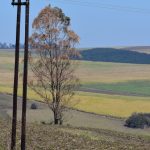
Bloemfontein sits on a high plateau in central South Africa (the Highveld), at an elevation of about 1,395–1,400 meters (around 4,577 feet). It features a generally flat landscape with occasional hills (kopjes), bordering semi-arid Karoo regions. The city lies near the southern edge of the Highveld grassland, with the Mangaung Metropolitan Municipality encompassing it along with areas like Botshabelo and Thaba ‘Nchu.
- Climate: It has a relatively dry steppe climate with hot summers and cool to mild winters. Temperatures can drop below freezing in winter, and rainfall is moderate, concentrated in summer months. This supports agriculture in the surrounding region but also contributes to water management challenges.
- Location Advantages: Its central position makes it a key transport hub, with good rail and road connections (e.g., N1 highway) to Johannesburg (~400 km), Cape Town, and other major centers. Bram Fischer International Airport serves the area.
History
The area was long inhabited by San (Bushmen) people and later Bantu-speaking groups. European settlement intensified in the 19th century amid tensions between British authorities, Boer trekkers, Griqua, and Basotho.
- Founding (1846): British Major Henry Douglas Warden established it as a fort and residency due to its central location and reliable water source (a fountain associated with early settler Johan Nicolaas Brits or similar). It served as the seat of the Orange River Sovereignty (1848–1854).
- Orange Free State Republic (1854–1902): It became the capital of the independent Boer republic. The 1899 Bloemfontein Conference (attempting to avert war) failed, leading to the Second Anglo-Boer War (South African War). British forces occupied it in 1900.
- Union of South Africa (1910 onward): Designated as the judicial capital. The ANC was founded here in 1912 (at what is now the site near Naval Hill), and the National Party in 1915—highlighting its role in modern South African politics.
- 20th Century Growth: Boosted by railways, diamond/gold discoveries nearby, and later the Orange River Project. Post-apartheid, it integrated into the Mangaung Metro (2000).
Notable birth: J.R.R. Tolkien (1892), though commemorations are minimal.