






Credit
Noupoort is a small town in the eastern Karoo region of South Africa’s Northern Cape province. It serves as a quiet but historically significant settlement shaped by railways, military history, agriculture, and more recent renewable energy developments.
Noupoort developed as a railway town. The station was established in 1884 on the farm Hartebeeshoek (or portions of Caroluspoort) when the line from Port Elizabeth extended northward. It quickly became a major junction connecting Cape Town, Kimberley, Namibia, and beyond.
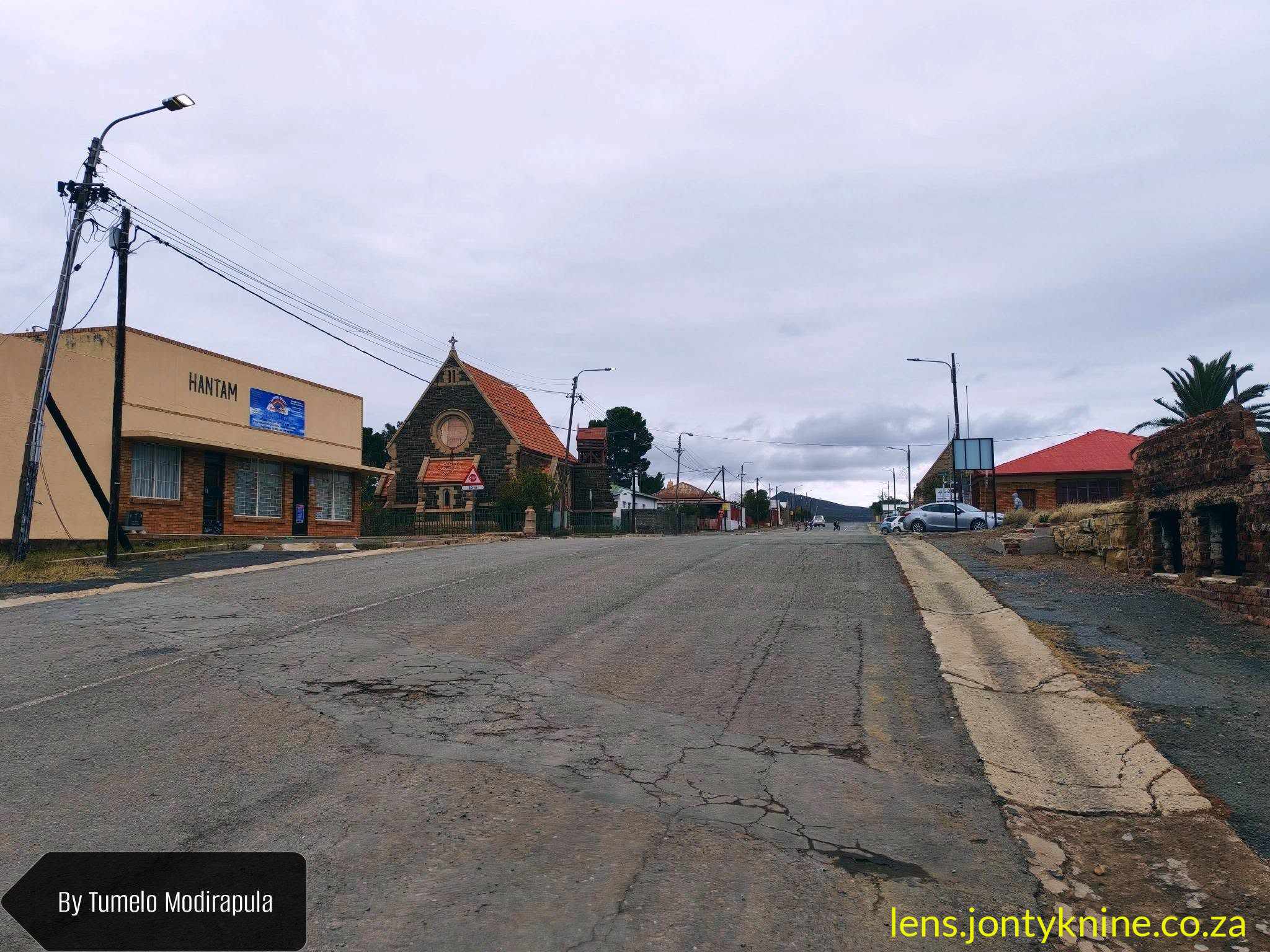
- In the Second Anglo-Boer War (1899–1902), it served as a British base with a hospital, prison stockade, and one of the finest blockhouses in the Southern Hemisphere. The St. Agnes Anglican Church (built ~1901 by British troops, now a National Heritage site and museum) commemorates fallen soldiers.
- Peak railway era (1920s): Up to 85–100 trains daily, supporting hotels, stores, and a vibrant community.
- Decline followed dieselization in the 1960s, reducing jobs and causing population outflow. Municipal status came in 1942 after a village board in 1937.