






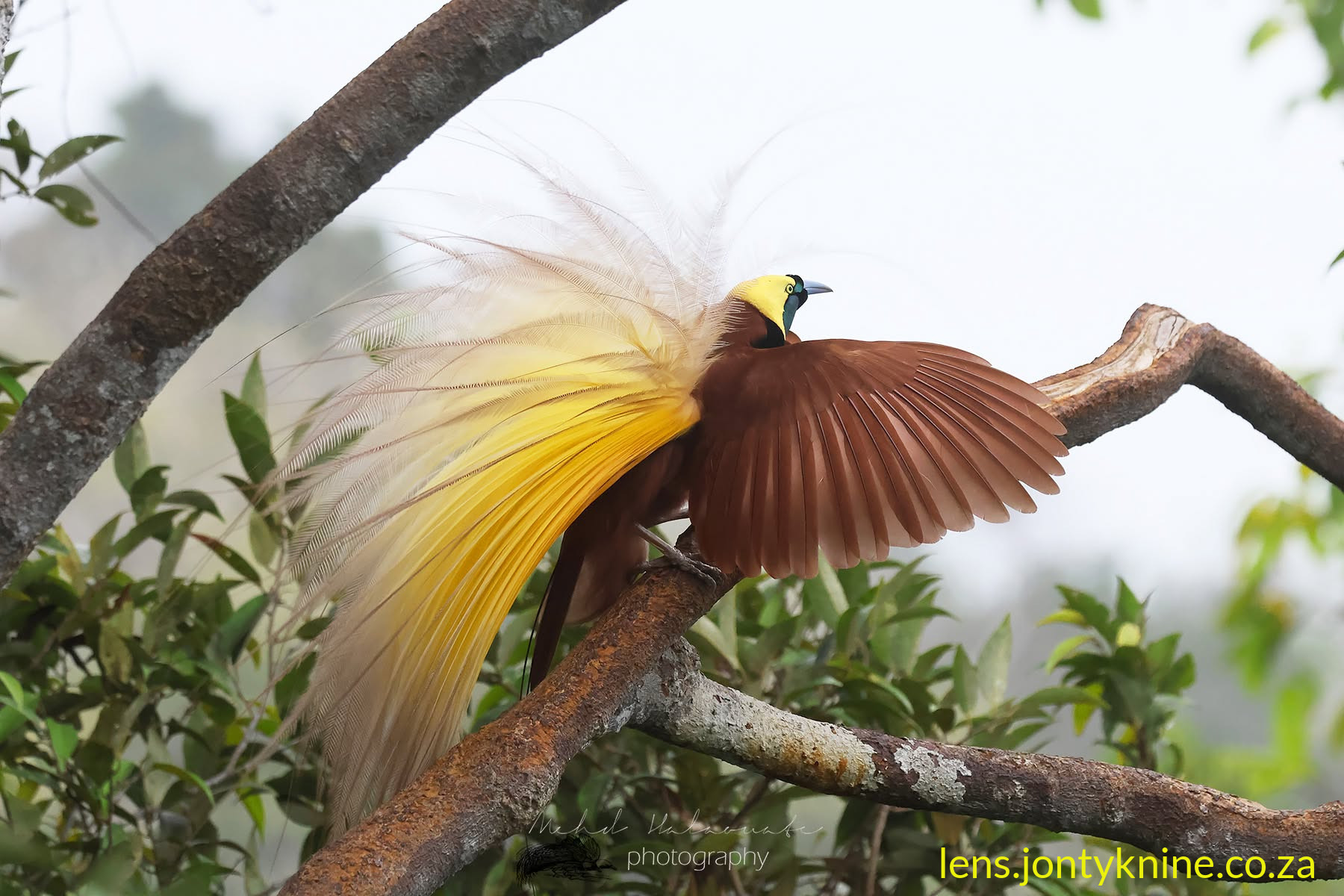

The Greater Bird-of-paradise (Paradisaea apoda) is a species of bird belonging to the Paradisaeidae family, famous for its striking courtship displays and elaborate plumage.
Name Origin: The scientific name apoda means “footless.” Early European traders received trade skins prepared by Indigenous hunters without legs, leading to a popular 16th-century myth that the birds floated perpetually in the air without landing.
Distinct Appearance: Males feature maroon-brown bodies, a yellow crown, an emerald-green iridescent throat, and long, cascading yellow and white flank plumes used during mating displays. Females possess a simpler, muted brown plumage.
Lek Mating System: Males gather in shared display areas high in the forest canopy called leks. Here, they dance, posture, and shake their vivid plumes to compete for female attention.
Habitat & Range: Native to the lowland forests and hill regions of southwest New Guinea and the Aru Islands of Indonesia.
Diet: Omnivorous, feeding primarily on wild fruits, berries, and small arthropods.