




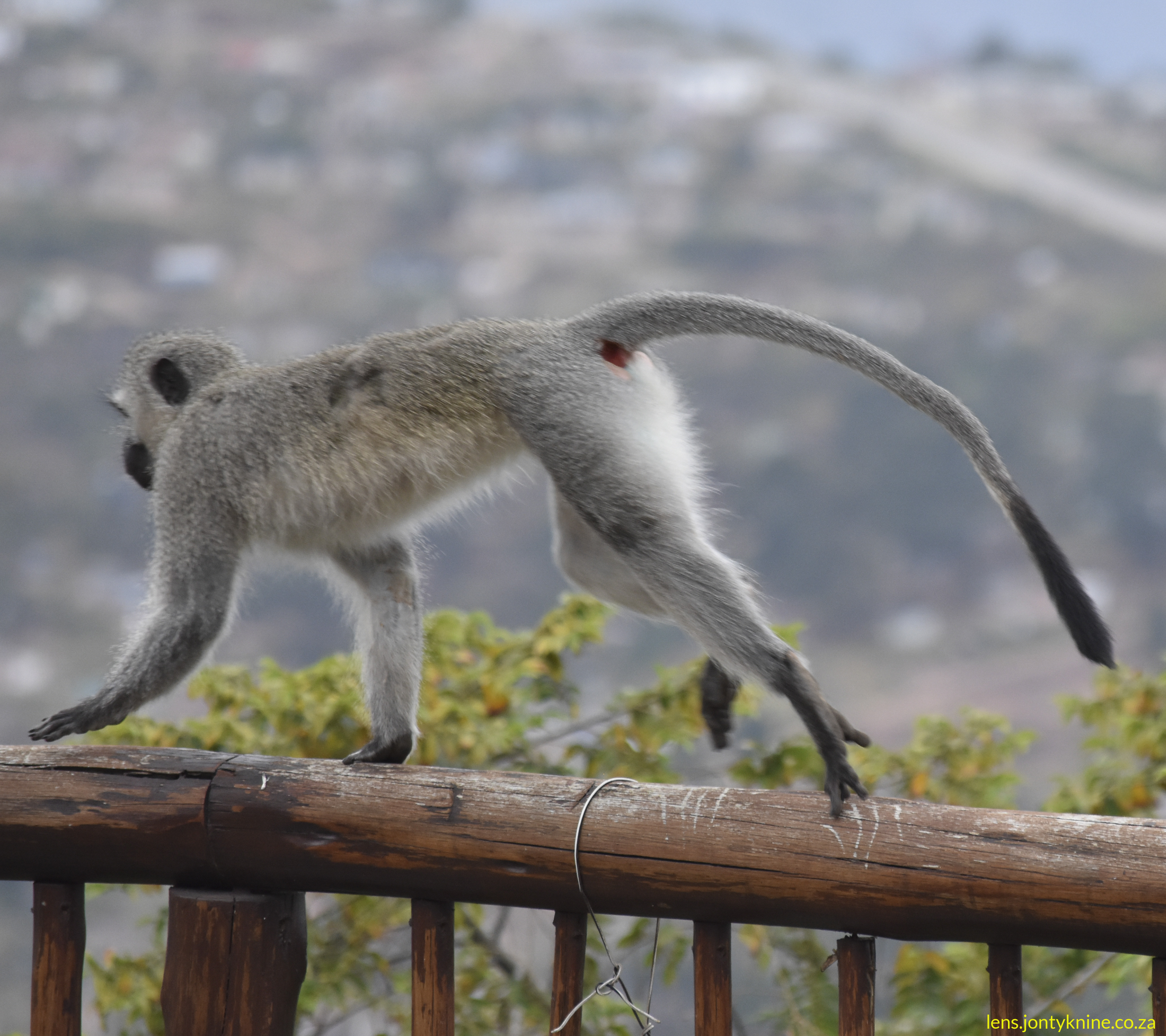
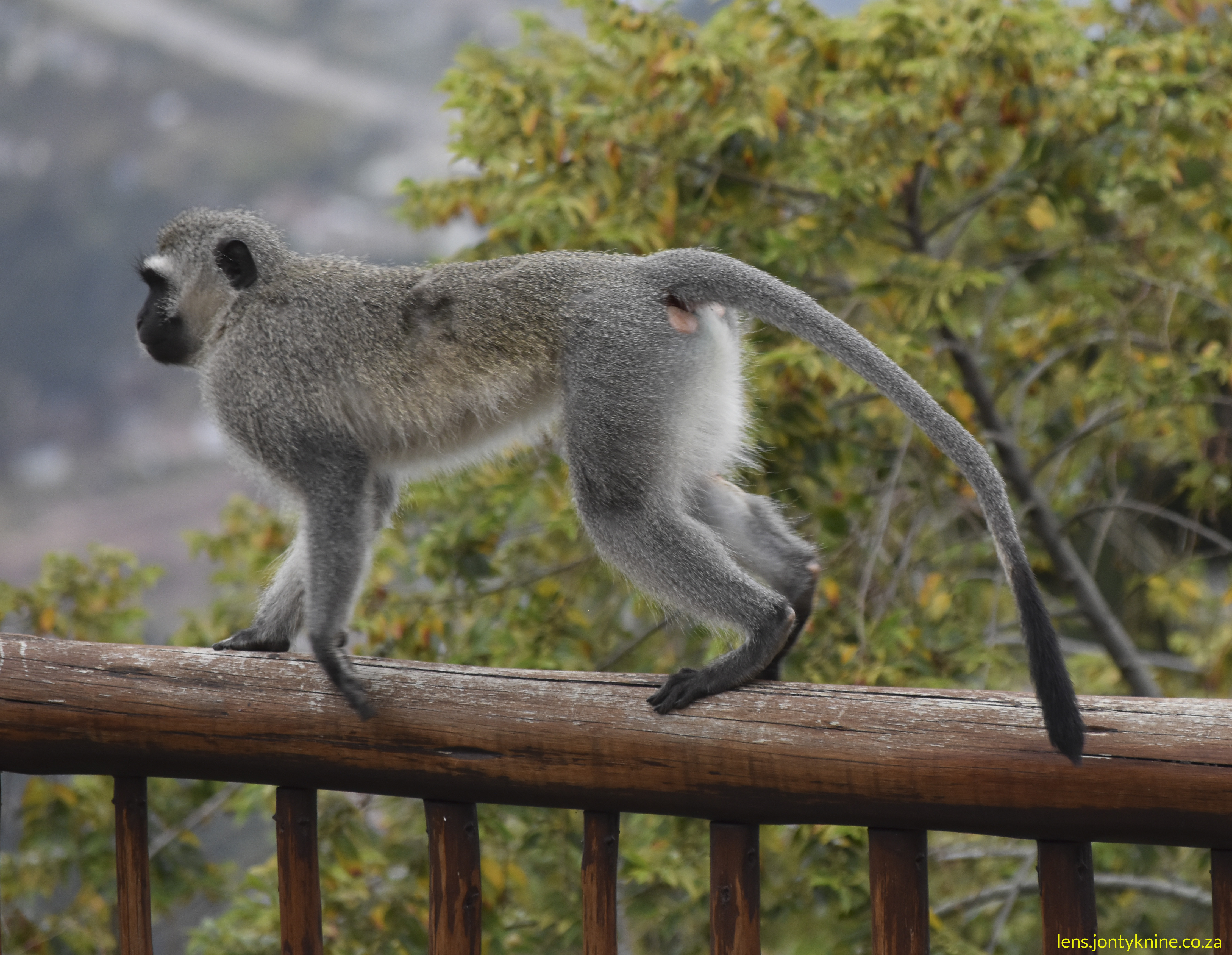
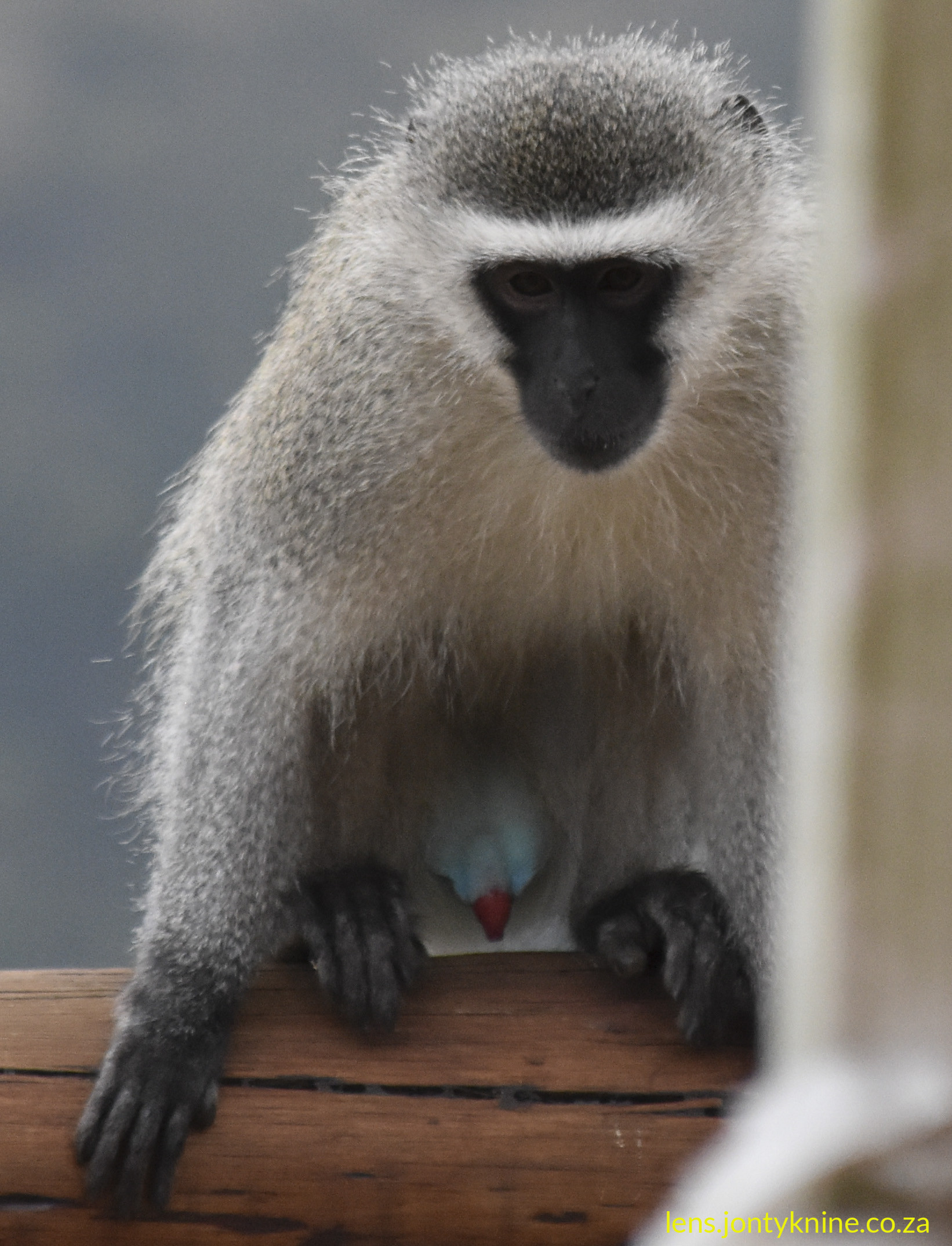
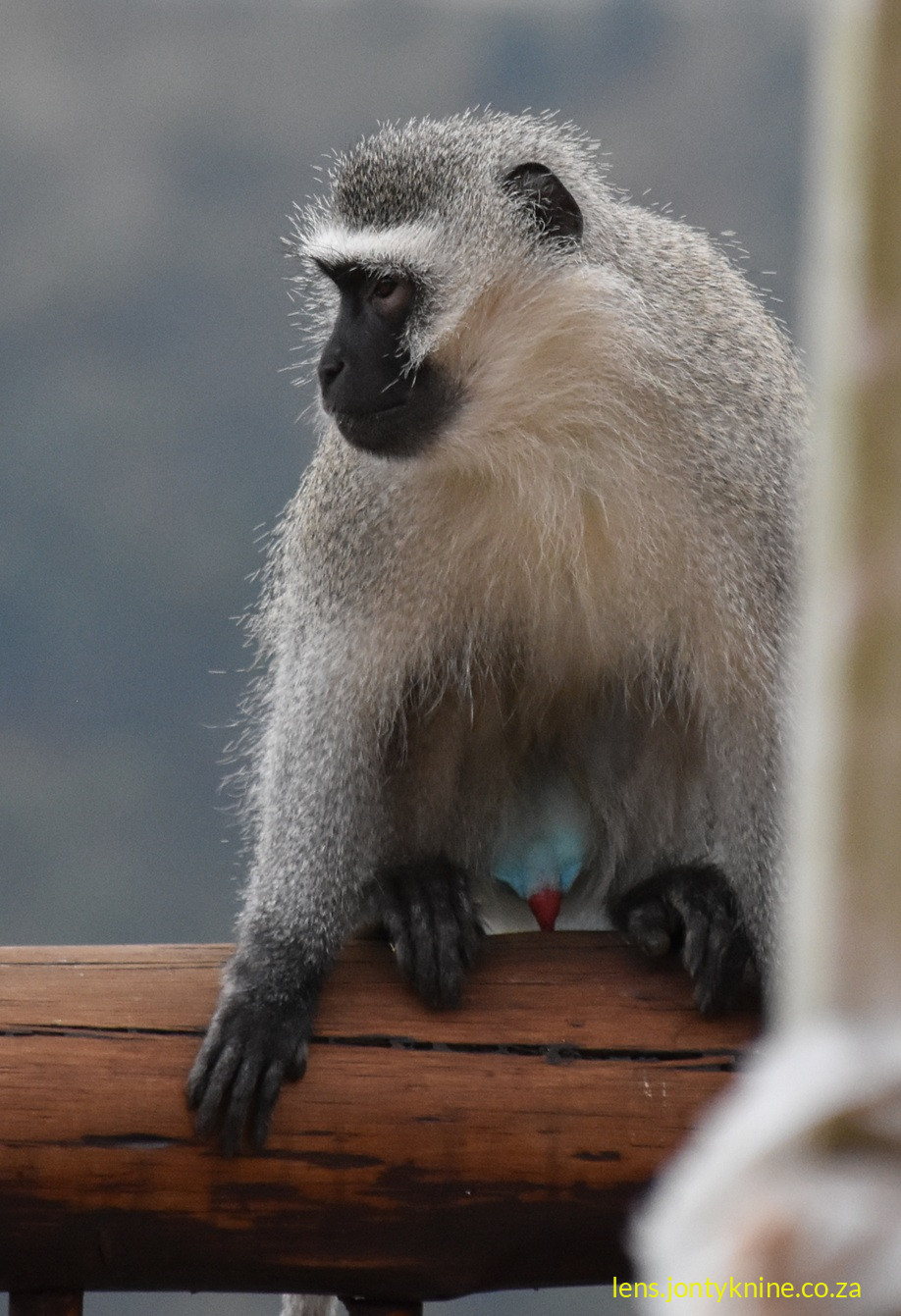
Vervet monkeys (Chlorocebus pygerythrus) are widespread, highly adaptable primates that are a familiar and often controversial presence across much of KwaZulu-Natal (KZN), South Africa. They thrive in diverse habitats ranging from coastal dune forests and riverine woodlands to urban suburbs, eco-estates, and agricultural edges. In KZN they are particularly visible along the coastal belt (including Durban/eThekwini, Ballito, the South Coast, and north toward Hluhluwe), inland riverine areas, and mosaic landscapes of forest, thicket, and human development.
Identification and basic biology
Vervets are medium-sized cercopithecine monkeys. Adults typically weigh 3–6 kg (males larger than females). Key features include a black face with a white fringe, mottled greyish-green to olive fur, a long tail, and (in males) a distinctive bright blue scrotum. They are diurnal and semi-terrestrial: they forage and travel on the ground but sleep and take refuge in trees. Troops usually number 10–50+ individuals (commonly around 20–35 in many KZN studies), with multi-male/multi-female structure. Females are philopatric (remain in their natal troop and form stable dominance hierarchies); males disperse at maturity. They are highly social, with complex vocalisations (including specific alarm calls for different predators), grooming, and allomothering.
Diet is opportunistic and omnivorous but primarily plant-based: fruits, leaves, flowers, seeds, gum, bark, and shoots, supplemented by insects, bird eggs, nestlings, lizards, and other small vertebrates. In human-modified areas they readily exploit garden fruit, bird feeders, refuse, and intentionally or unintentionally provided food. They require daily access to water and prefer habitats with trees for cover and sleeping.
Reproduction is seasonal in southern Africa, with births often concentrated around March–May. Females typically produce one infant per year after a gestation of roughly 140 days; infant survival is relatively low under natural conditions.
Distribution and habitat use in KZN
Vervets occur throughout KZN in suitable wooded or mosaic habitats. They are especially abundant in the humid coastal regions (e.g., Ballito receives ~1 000 mm annual rainfall) and riverine corridors, but they also persist in drier inland areas where trees and water are available. They are absent from pure open grassland or desert-like environments.
Urban and peri-urban populations have been intensively studied, particularly in eThekwini (Durban) and the Ballito area. Home ranges in urban forest mosaics are often relatively small (e.g., ~30 ha at 95% kernel density estimates in one Durban study; other eco-estate studies report ranges on the order of 0.9–1.5 km² depending on method and sex). Core areas are smaller still. Preferred habitats within these mosaics include forest/thicket patches and built-up/garden areas; they use roads, residential gardens, and golf-course edges while tending to avoid pure wetlands or open grassland. Activity is typically higher in the morning, with midday rest in shade.
Notable observations include troops swimming across crocodile-inhabited rivers in Hluhluwe Game Reserve—an unusual but documented behaviour. In eco-estates such as Simbithi (Ballito), multiple troops (around 11 groups in recent surveys, average ~25 individuals) share space with residents, with some groups ranging outside estate boundaries.
Human–monkey interactions and conflict
Human–vervet conflict is a major feature of life in much of coastal and urban KZN. Drivers include:
- Habitat fragmentation and urban expansion reducing natural food and cover.
- Easy access to anthropogenic food via unsecured refuse, fruiting garden trees, bird feeders, and deliberate feeding.
- Loss or reduction of natural predators.
- Habituation that reduces fear of people.
Consequences range from garden and property damage, raiding of kitchens and refuse, to occasional bites or injuries (especially involving elderly residents or dogs). Admissions to wildlife rehabilitation centres (e.g., CROW in Durban) have risen over time; one analysis of 2011–2018 data recorded over 1 000 vervet admissions, mostly reported by the public and concentrated in central eThekwini, reflecting vehicle collisions, dog attacks, electrocution, snaring, poisoning, pellet-gun injuries, and other anthropogenic trauma.
Recent high-profile cases include a planned “wildlife management programme” (effectively a cull) at Umdoni Retirement Village on the KZN South Coast in late 2025, which was halted after public and animal-welfare opposition. Ezemvelo KZN Wildlife and others have repeatedly emphasised that poor waste management is a primary driver of conflict; secure refuse storage is far more effective long-term than lethal control. Feeding is strongly discouraged because it accelerates habituation, can inflate local densities beyond natural carrying capacity in remnant forest patches, and may contribute to health issues (e.g., dietary shifts linked to birthing complications).
Myths persist and exacerbate tensions: claims of uncontrolled population explosion, that vervets routinely carry rabies or are “dirty,” or that they are inherently aggressive toward people without provocation. Organisations such as Monkey Helpline (based in Westville/Durban and active province-wide) work to counter these, provide rescue and rehabilitation, and educate the public. Legal status under the Natal Nature Conservation Ordinance is important: on private land, permits are generally not required to control vervets, but capturing, transporting, releasing, or keeping them in captivity is regulated; they may not be kept as pets.
Some research suggests urban densities in parts of north Durban can reach many times the estimated natural carrying capacity of remaining coastal forest fragments, driven by food subsidies, irrigated gardens, and predator reduction. This can have cascading effects (e.g., increased predation pressure on birds). Other studies highlight behavioural flexibility: urban troops adjust ranging, social networks, and activity in response to both positive (provisioning) and negative (harassment) human encounters.
Conservation status and management
Nationally and regionally the species is assessed as Least Concern. It is widespread, adaptable, and has no major range-wide threats, although local persecution (shooting, poisoning, trapping for traditional medicine or the pet trade), habitat loss, and vehicle mortality are ongoing. There is no evidence of large-scale extirpation in KZN. Conservation bodies (Ezemvelo KZN Wildlife, Endangered Wildlife Trust) stress non-lethal approaches: secure waste, avoid feeding, maintain or restore natural habitat corridors and fruiting trees where appropriate, and use deterrents (dogs can reduce garden visitation in some contexts). Rehabilitation and carefully managed reintroductions occur, with variable success depending on troop size, site quality, and post-release monitoring.
Ecological roles and broader context
Vervets are seed dispersers and form part of the prey base for crowned eagles, leopards, pythons, and other predators where these still occur. In transforming landscapes they illustrate both resilience and the challenges of co-existence. Their intelligence, social complexity, and dietary flexibility allow them to exploit novel niches, but the same traits make conflict management difficult once troops become habituated and reliant on human resources.
In short, vervet monkeys are an integral, highly visible component of KZN’s biodiversity—from protected reserves to suburban gardens. Effective coexistence hinges less on population control and more on reducing artificial food attractants, protecting residual natural habitat, and fostering informed public attitudes. Local organisations (Monkey Helpline, Ezemvelo, rehabilitation centres) and ongoing research (including long-term urban projects in Ballito and Durban) continue to refine practical solutions.