



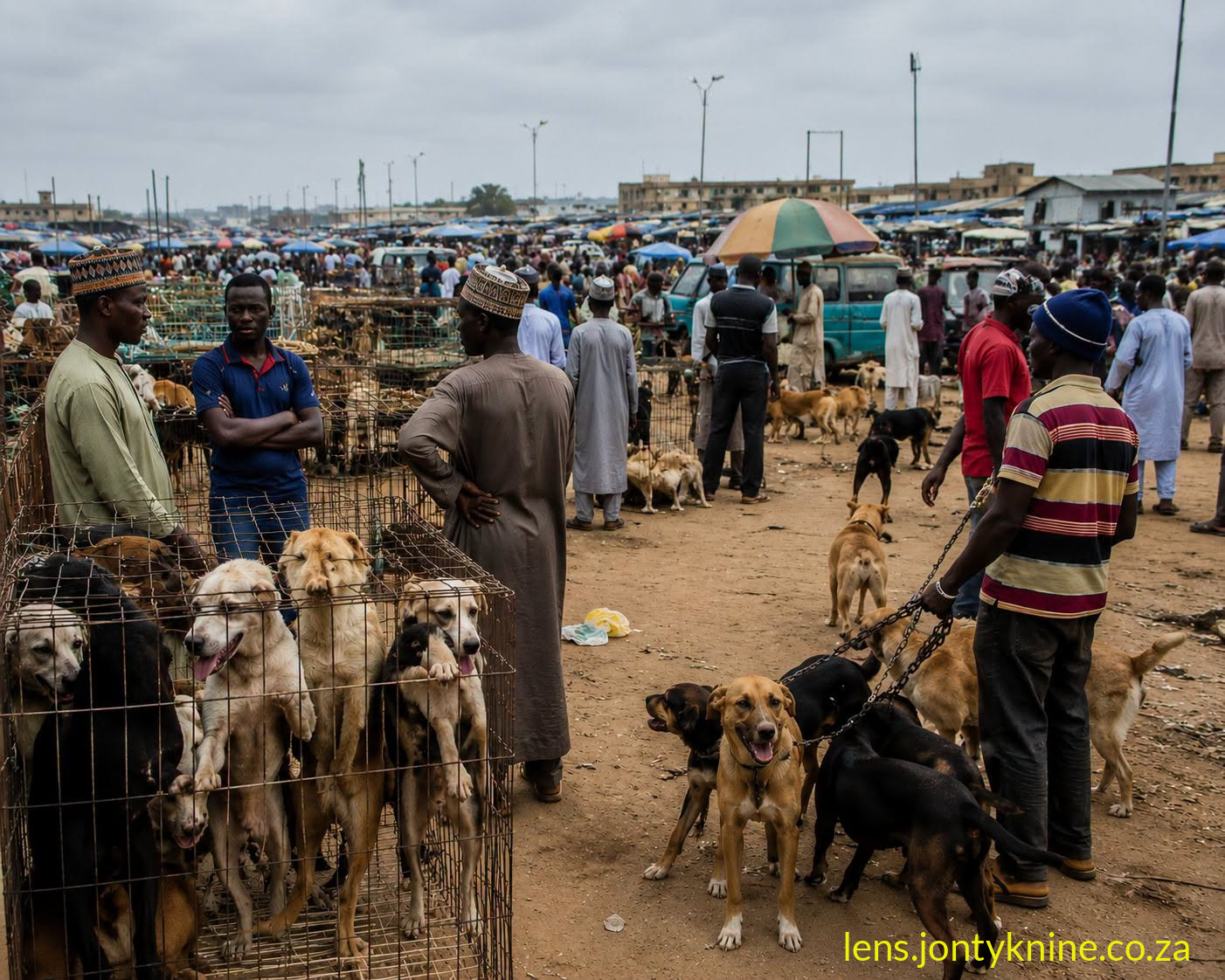
(also spelled Danwaki or Dawaki) in Plateau State stands out as one of the country’s—and Africa’s—most distinctive traditional markets. It is widely recognized as Nigeria’s largest dog market, centered on the trade of dogs primarily for meat consumption, a practice known locally as “404.”
Location and Operations
Dawaki is located in Kanke Local Government Area of Plateau State, in north-central Nigeria. The market operates mainly on Thursdays, drawing traders, buyers, and sellers from across Nigeria (especially the North-east, North-west, and South-south regions) and sometimes neighboring countries. It functions as a bustling hub where dogs are sold alive or slaughtered on-site.
- Scale and Economy: Transactions in dogs alone can exceed N3 million weekly. The broader market also trades in livestock, palm oil, baobab leaves, and other goods, generating significant local revenue through taxes (e.g., N50 per dog or jerry can of palm oil).
- Pricing: Dogs typically sell for around $25–$40 USD (roughly ₦20,000–₦50,000+ depending on size, weight, condition, and training), though prices fluctuate.
Women play a central role, often handling sales after men source dogs from places like Kano. Supply chains extend to northern states and even countries such as Niger, Chad, and Cameroon.
Historical Context
The market has deep roots, with oral traditions claiming it dates back over 300 years. It reportedly began as a family gathering spot and evolved from a pre-colonial trading point linked to trans-Saharan routes, including slave trading and later livestock (its name “Dawaki” relates to “horses” or donkeys in local lore). It relocated in 2016 due to growth and congestion but retains its ancient character.
Cultural and Culinary Significance
Dog meat is consumed for its taste (the top reason in surveys), perceived medicinal or strength-enhancing properties (e.g., endurance, protection against poisoning, or spiritual benefits), and as a traditional delicacy in certain communities, especially in the Middle Belt, South-south, and parts of the South. It is often prepared as pepper soup, roasted, or paired with local drinks.
Nigeria ranks as Africa’s top consumer of dog meat and third globally (after South Korea and Vietnam), according to the Dog Friendly Country Index. This has made the trade a structured, economically important informal industry, though it remains controversial and taboo in many other parts of Nigeria and internationally.
Uniqueness and Broader Implications
What makes Dawaki particularly unique among African markets is its specialized, high-volume focus on dogs in a dedicated setting—complete with live animals, butchers, and long-distance buyers—embedded in a multi-commodity traditional weekly market. It blends commerce, culture, gender roles (women as key vendors), and historical continuity in a way few other markets do.
Nuances and Considerations:
- Animal Welfare and Health: Dogs are often sourced as strays or from households, transported in cramped conditions, raising concerns about rabies and other diseases. Studies have detected viruses like canine parvovirus in traded dogs.
- Regional Variations: Consumption is stronger in specific ethnic and regional groups; attempts at bans (e.g., in some southern states) have faced resistance.
- Economic Role: It supports livelihoods for hunters, traders, transporters, butchers, and vendors, while connecting northern supply with southern demand.
- Edge Cases: Not all dogs are for meat—some may be for other purposes—but the dominant trade is culinary. Demand fluctuates with seasons, festivals, and awareness campaigns.
This market exemplifies Nigeria’s rich tapestry of traditional commerce, where ancient practices persist alongside modern economic realities. Recent BBC coverage (2026) has brought it wider international attention, highlighting both its vibrancy and the debates around cynophagy (dog meat consumption).